

We’re witnessing a pivotal moment in the evolution of AI—from passive systems to active, decision-making agents. This post dives deep into the latest advancements in agentic AI, what it really takes to move from prototype to production, and why 2025 may be the year these systems finally prove their enterprise value.
Let’s unpack where AI agents stand today.
From LLMs to Agents: The Evolution of Intelligent Action
Large Language Models (LLMs) like GPT-4 are remarkable at generating human-like text. But their usefulness has limits. On their own, they’re like genius interns locked in a library—full of knowledge but unable to browse the web, use tools, or remember past tasks.
To bridge this gap, developers began linking LLMs with external components: APIs, databases, file systems, custom functions, and memory structures. These integrations enabled what we now call “chains”—predefined flows that guide the model step by step through a task. LangChain emerged as a leading framework to build these modular workflows.
But chains are rigid. They assume we always know in advance what steps to take.
This realization gave birth to AI Agents—LLM-powered systems that are autonomous, tool-using, context-aware, and goal-directed. They aren’t just executing prewritten playbooks; they’re writing and adapting the playbook in real time.
What Are AI Agents?
At their core, AI agents are systems designed to operate semi-autonomously in pursuit of a goal. They’re equipped with:
- Tools: APIs, databases, file systems, custom functions
- Memory: for tracking prior decisions and context
- Reasoning abilities: to choose actions based on outcomes
- Planning capabilities: to sequence tasks intelligently
Agents can take initiative, recover from failure, and adapt mid-task. Think of them not just as chatbots, but as digital collaborators—capable of retrieving documents, updating spreadsheets, analyzing trends, and even initiating follow-up tasks, all with minimal human input.
Four Pillars of Production-Ready Agents
To move from demos to dependable systems, developers must master four critical domains:
1. Planning: Orchestrating Multi-Step Logic
LLMs handle single requests well. But multi-step tasks—especially those involving conditional logic, external APIs, and dynamic data—require a more sophisticated planning stack.
Emerging strategies include:
- Tree of Thoughts: Agents evaluate multiple reasoning paths before committing—like a chess player simulating moves.
- Self-Reflection: Agents review past steps and outcomes, sometimes with the help of another LLM, to improve their performance over time.
- Domain-Specific Flows: Coding agents, research agents, and ops agents require unique task structures—no one-size-fits-all.
- Specialized Reasoners: New models optimized for planning and strategy (e.g., DeepSeek, Claude Opus) are often paired with faster LLMs for execution.
- LangGraph and Graph-Based Agents: These frameworks allow developers to build stateful, branching, looping logic flows—ideal for tasks like data cleaning, report generation, and multi-agent collaboration.
2. Reliability: Ensuring Consistent, Trustworthy Performance
Despite the hype, many agents still fail in the real world. Why?
- Ambiguous instructions: Vague prompts lead to unpredictable results.
- LLM non-determinism: The same input doesn’t always yield the same output.
- Tool misuse: Agents call the wrong tools, or use them incorrectly.
Solutions are emerging:
- LangSmith provides detailed observability—tracking every agent decision, tool call, and intermediate result.
- Guardrails and Evaluators help enforce constraints and spot hallucinations.
- Fallback logic and retry mechanisms add resilience.
Still, full reliability remains an open challenge—especially in high-stakes domains like finance, healthcare, or law.
3. UX: The Interface Between Humans and Agents
Classic chat interfaces work—but they’re not enough. We’re now seeing:
- Generative UI (GenUI): Combining LLMs with rich front-end elements like dropdowns, carousels, and tables for mixed-input workflows.
- Agent Inboxes: Think of this as your digital assistant’s outbox—a place to review, approve, or redirect tasks the agent wants to perform.
- Conversational Builders: Interfaces where users can train, correct, or debug agents in real-time.
The future UX of agents will blur the lines between no-code, low-code, and natural language interaction—turning intent into structured action with minimal friction.
4. Memory: The Context Engine
Memory is where today’s agents still feel primitive. But the conceptual framework is maturing, drawing from cognitive science:
- Semantic Memory: Persistent facts—names, preferences, company data. Usually stored in vector databases or key-value stores.
- Episodic Memory: Logs of interactions and decisions—used for reflection, debugging, and personalization.
- Procedural Memory: How-to instructions—like policy documents or embedded behavioral rules.
Frameworks are experimenting with hybrid memory stores, allowing agents to reason across sessions, learn user habits, and even develop “personalities” or behavioral norms over time.
The Road Ahead: What Comes Next
While the buzz is everywhere, the field is still early. Today’s AI agents are capable, but fragile. They’re smart—yet unaware of their surroundings. Fast—yet easily derailed. In short: they’re toddlers with PhDs.
Here’s where we’re headed next:
- Long-Running Agent Infrastructure: Support for persistent state, bursty workloads, background scheduling, and system-level orchestration.
- Multi-Agent Collaboration: Think supply chains of agents—each with a role, personality, and set of capabilities—cooperating toward a shared goal.
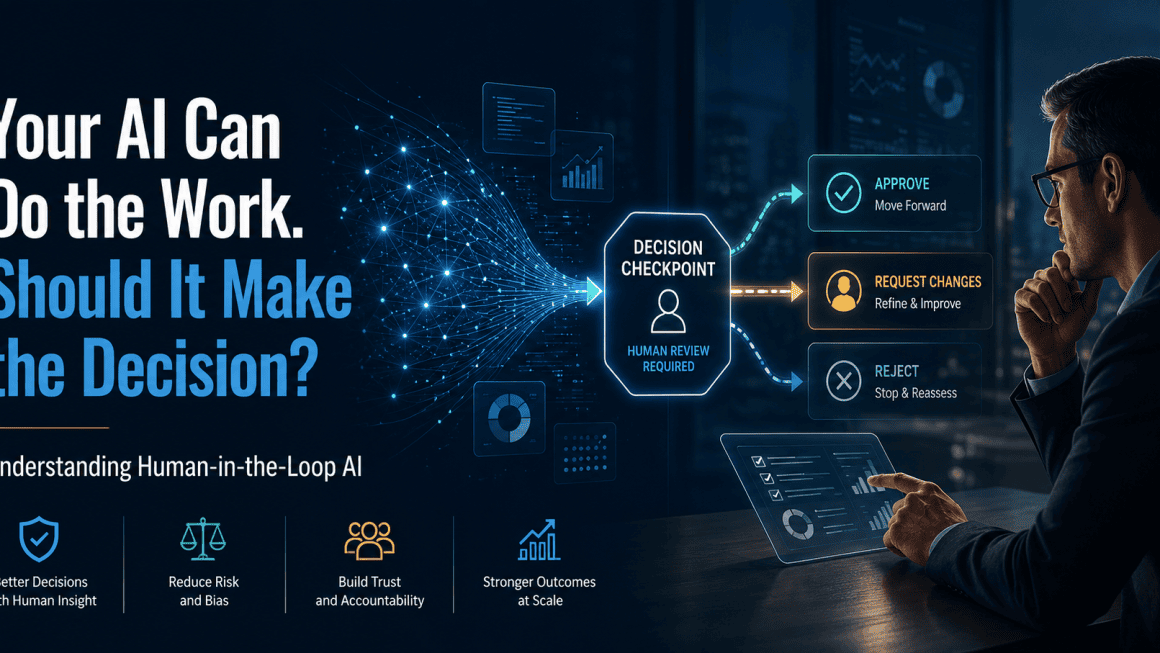
- Human-in-the-Loop Systems: Agents won’t replace humans; they’ll amplify them. Expect approval queues, fallback workflows, and co-pilot paradigms to stick around.
- Secure, auditable AI: Enterprises need transparency, traceability, and compliance baked into their AI layers from day one.
If 2024 was about showing that agents can work, 2025 is about showing that they can scale—securely, reliably, and at the speed of business.