

How have HubSpot & Zoho used AI?
The boardrooms at HubSpot and Zoho have a fever, and the only prescription is more “Copilots.” For the last decade, these platforms have thrived on a simple, lucrative friction: Complexity. They built massive, cluttered dashboards that required human “seats” to navigate, update, and manage.
But as we move deeper into 2026, these giants are facing an existential crisis. Their solution? Slapping a shiny AI sidebar on a 2015-era database and calling it “revolutionary.” It’s the ultimate case of putting lipstick on a pig, and the pig is a legacy revenue model that is fundamentally at odds with true artificial intelligence.
The “Seat-Based” Paradox: Selling the Person You’re Trying to Replace
The core conflict of HubSpot and Zoho is their bank account. Historically, their pricing model depended on seats, which can slow the transition toward fully autonomous workflows. They need humans logged in, clicking buttons, and staring at “Breeze” or “Zia” suggestions.
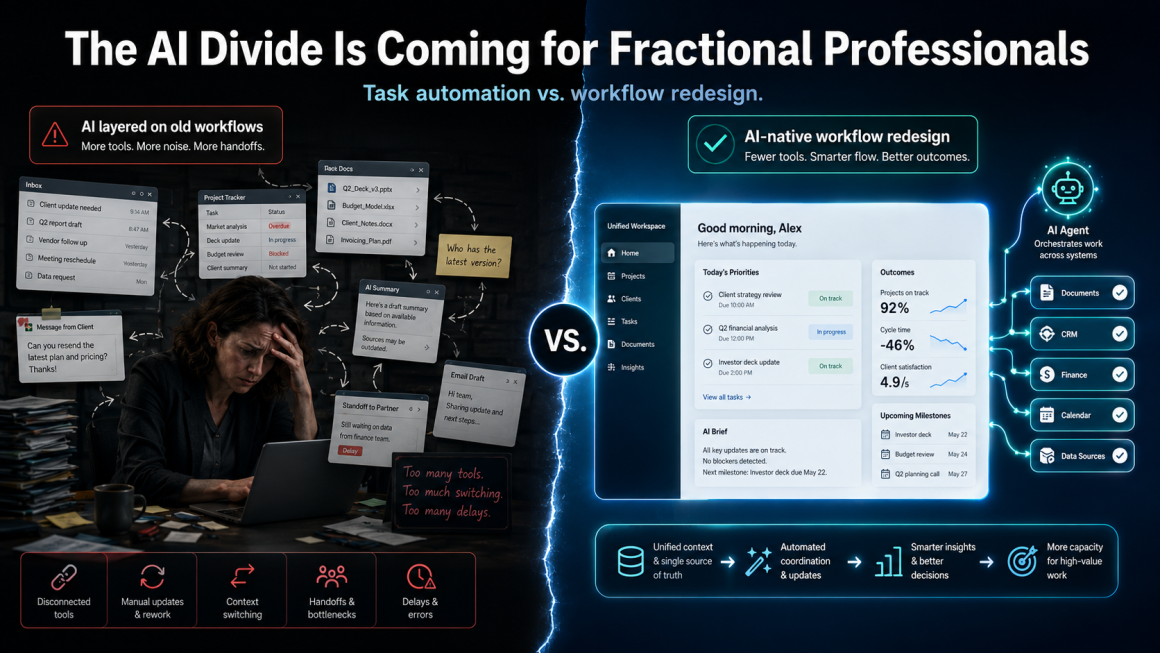
True AI doesn’t want to help you use a CRM; it wants to eliminate it.
- The Legacy Goal: Make the human 10% more efficient at data entry.
- The AI-Native Goal: Ensure the human never has to open the app again.
By introducing AI agents that “help” you manage your CRM, HubSpot and Zoho are desperately trying to preserve the “seat.” If the AI actually worked—if it autonomously updated records, forecasted with 99% accuracy, and managed the pipeline without human intervention—the “user interface” would become a ghost town. They are selling you a “Copilot” for a flight that shouldn’t require a pilot at all.
The “Bilateral Wrapper” Trap
We are currently witnessing the rise of the Bilateral Wrapper. It’s a performative dance of algorithms that looks like this:
- HubSpot’s AI drafts a “personalized” sales email based on messy, incomplete CRM data.
- This email is sent to a prospect.
- The Prospect’s AI (like a specialized Gmail agent) reads the email, realizes it’s automated fluff, and archives it or drafts a generic “not interested” reply.
This is a loop of AI talking to AI, while a human at HubSpot still pays $200/month for a seat to watch the “engagement metrics” tick up. It’s a “wrapper” on top of a “wrapper,” adding zero value to the actual business outcome. When the underlying data is “Garbage-In” (because humans hate manual data entry), the “AI-Out” is just high-velocity hallucinations.
The “Feature Bloat” Band-Aid
HubSpot’s “Breeze” and Zoho’s “Zia” are classic examples of Architectural Debt. Instead of re-engineering their platforms to be agent-first—where the database is built for machine consumption—they are crowbarring LLMs into the sidebar. They are asking you to “Chat with your CRM.”
“You shouldn’t have to ‘chat’ with your CRM any more than you should have to ‘chat’ with your electricity meter. A CRM should be an invisible ledger of truth. ‘Chatting’ is just a high-tech way of admitting your UI is too cluttered to navigate.”
Comparison: Legacy Facade vs. Native Reality
| Feature | HubSpot/Zoho “Lipstick” | AI-Native Competitors |
|---|---|---|
| Data Entry | AI “helps” you fill out forms faster. | No forms. The AI listens to calls/emails and updates the ledger. |
| Workflow | You trigger an AI “flow” from a dashboard. | Zero-UI. The agent acts on intent in the background. |
| Pricing Model | Per User / Per Seat. | Per Outcome / Per Task. |
Conclusion: A Better Flashlight for a Cave They Built
Atlassian, Zoho, and HubSpot are all selling the same thing: a better flashlight. They built a dark, complex cave of data silos and manual workflows over the last twenty years. Now that AI has arrived, they aren’t leading you out of the cave; they’re just selling you an AI-powered flashlight so you can see the walls more clearly.
The “built-from-the-ground-up” AI guys aren’t looking at the cave at all. They’re building a world where the cave doesn’t exist. For the legacy giants, the lipstick is starting to smear, and the underlying pig—the outdated, seat-based, manual-entry architecture—is finally being exposed.
The question for 2026 isn’t which CRM has the best AI. The question is: why do you still have a CRM?

The AI Facade: Frequently Asked Questions
1. What is an “AI Wrapper” in the context of HubSpot or Zoho?
An AI wrapper is when a legacy company takes an existing LLM (like GPT-4) and connects it to their interface via API without changing their core, outdated database. It’s a “skin” that makes old software look new.
2. Why is “Seat-Based Pricing” a problem for AI?
AI is meant to do the work of a human. If a company like HubSpot charges per human user (seat), they have a financial incentive to keep humans doing manual work rather than letting AI automate the entire process.
3. What does “Garbage-In, AI-Out” mean?
If your CRM data is messy or incomplete (which it usually is because humans hate manual entry), the AI “Copilot” will generate inaccurate emails, bad forecasts, and “hallucinated” insights based on that bad data.
4. Can’t HubSpot just “fix” their architecture?
Not easily. They have “Architectural Debt”—decades of code built for human clicking. Turning that into an “Agent-First” platform would require a total rebuild that would likely break their current customers’ integrations.
5. Is “Breeze” or “Zia” actually autonomous?
No. They are largely reactive assistants. They wait for a human to give a prompt or click a button, which keeps the human “trapped” in the interface to justify the subscription cost.
6. How do AI-native startups differ from these legacy giants?
AI-native companies build “Headless” software. There is no dashboard to log into; the AI works in the background (via Slack, email, or API) and only alerts you when a task is completed.
7. What is the “Bilateral Wrapper” effect?
It’s a useless loop where a salesperson’s AI sends a “personalized” email to a prospect, whose own AI then summarizes or archives it. No human ever actually engages, but the software companies still charge for the “activity.”
8. Why is “Chatting with your CRM” considered a bad thing?
Because “chat” is just a slower way to navigate a bad UI. A truly intelligent CRM shouldn’t need you to ask questions; it should provide the answer before you even realize there’s a problem.
9. Will Zoho and HubSpot go out of business?
They won’t disappear overnight, but they risk becoming “utilities” or “legacy storage” while the actual work moves to smaller, faster, agent-driven platforms.
10. Should I stop paying for seat-based CRM?
In 2026, savvy buyers are moving toward “Outcome-Based” pricing, where you pay for a lead generated or a deal closed, rather than just paying for a person to sit in front of a dashboard.
#SaaS #AIWrappers #TechDebt #HubSpot #Zoho #CRM #AgenticAI #FutureOfWork #DigitalTransformation #B2BMarketing #Zohocrm #hubspotcrm