

The Advantages, Risks, and Applications of Autonomous AI
Agents
Autonomous AI agents are at the forefront of technological innovation, transforming industries and redefining how we solve complex tasks.
However, like any powerful tool, they come with both benefits and risks. In this article, we’ll explore the advantages and risks of using autonomous AI agents, delve into their diverse applications, and highlight companies that are harnessing their potential.
Advantages of Autonomous AI Agents
Autonomous AI agents are intelligent software programs designed to perform tasks without constant human supervision. They can sense their environment, reason, learn from their experiences, and take actions12. Here are some of the key advantages:
- Autonomy: AI agents can operate independently without human intervention1.
- Perception: They can sense their environment through various input methods such as cameras, sensors, and data streams1.
- Reasoning: They use algorithms and models to process information and make decisions1.
- Learning: Many AI agents are capable of learning from their experiences using machine learning techniques1.
- Action: They can take actions or provide recommendations based on their reasoning1.
- Efficiency: AI agents can automate complex workflows, enhancing operational efficiency3.
- Time-saving: They free up human employees to focus on higher-value tasks by automating repetitive tasks3.
- Adaptability: AI agents can adjust their actions according to changes in the environment or new data2.
- Collaboration: One of the most significant advantages of AI agents is their ability to work together in multi-agent systems1.
- Applications: AI agents have a wide range of applications across various domains, from customer service to finance4.
Companies Using Autonomous AI Agents
Several companies are leveraging the power of autonomous AI agents to drive efficiency and innovation:
- Significant Gravitas Ltd.: Developed AutoGPT, one of the early autonomous AI agents5.
- Untapped Capital: Published the concept of autonomous AI agents5.
- Microsoft: Known for its AI agent, JARVIS6.
- Google: Utilizes AI agents in various applications7.
- Broadcom: Employs AI agents for different tasks7.
Risks of Using Autonomous AI Agents
While autonomous AI agents offer numerous benefits, they also present potential risks:
- Overlooking Rare Cases: As AI agents are based on statistical models, they might overlook rare cases and abnormalities, potentially leading to operational errors3.
- Complex Algorithms: The complex algorithms powering autonomous AI agents can be esoteric, making it challenging for users to understand or predict their behavior. This raises trust and transparency issues3.
- Ethical and Societal Considerations: The advent of autonomous AI agents brings to the forefront critical ethical and societal considerations. Issues such as privacy, security, and the impact on employment and social structures are paramount8.
In conclusion, autonomous AI agents are transforming the way we approach complex tasks and decision-making processes. While they offer numerous advantages, it’s crucial to be aware of the potential risks and implement responsible usage strategies. As we continue to innovate and evolve, autonomous AI agents will undoubtedly play a significant role in shaping our future.
Tags: #AI #automonousai #AIAgents #AITrust #aisecurity #GenAI
Author
 David Brown | CCO & Startup AI Investor
David Brown doesn't just discuss AI; he builds the infrastructure that makes it profitable. As CCO and Investor at Sentia AI, David is the strategist enterprise leaders turn to when their AI pilots stall and their data silos remain impenetrable. He fixes stalled AI pilots, CRM / ERP integration and scales enterprise AI with his amazingly talented teamates.
With a career forged on Wall Street and Ernst and Young, David brings a high-focus, results-driven discipline to the tech sector. His trajectory—from navigating global markets to CEO of startups and founding a top-tier international startup incubator for hundreds of ventures—has uniquely positioned him at the bleeding edge of the "Agentic AI" revolution.
The Enterprise AI Architect
David’s mission is the elimination of the "AI Circle of Sorrow"—the gap where expensive AI tools fail to talk to legacy systems and most importantly humans. He specializes in solving the most aggressive enterprise AI scaling hurdles facing large enterprise clients today:
Siloed Data Liquidation: Breaking down the walls between fragmented business units to create a unified data truth. See DIO: www.dio.sentia.online
ERP & CRM Connectivity: Forging seamless, bi-directional integration between core systems of record and modern AI applications. See DSO www.sentia.website
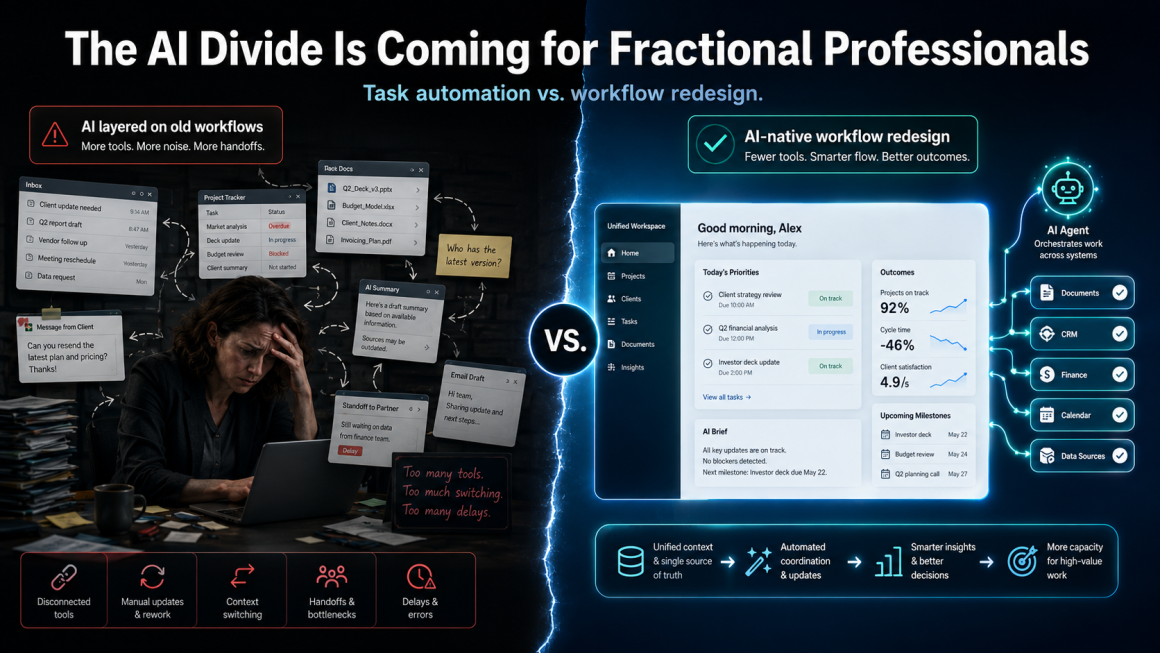
The "Single Pane of Glass": Developing client Unified AI Dashboards—a command center that provides C-Suite leaders with total visibility across every AI-driven workflow in the organization. This is one of Sentia's specialities.
Enterprise AI Scaling: Moving beyond fragmented "app-creep" to build a cohesive, governed, and scalable AI orchestration layer.
A relentless advocate for AI Orchestration, David ensures that Sentia AI remains a premier Salesforce partner by delivering autonomous agentic systems that don't just "help" sales teams—they transform revenue operations into high-velocity engines.
Connect with the Seer of AI Integration success:
LinkedIn: linkedin.com/in/davidbrown07
- Sentia Community
X (Twitter): @intlmktentry
Insights: Sentia AI Community

 David Brown | CCO & Startup AI Investor