

Executive Summary
Maximizing the ROI of Generative AI within enterprise environments requires a shift from instruction-based prompting to alignment-focused workflows. Research into Agentic AI indicates that jumping straight to execution leads to a “hallucination spiral” where users waste hours refining wording rather than addressing the context gap. By implementing an “Ask First” protocol, organizations can increase first-pass accuracy by 300% to 400%. Key takeaways include:
Alignment over Instructions: Traditional Natural Language Processing (NLP) interactions fail because the AI lacks specific business context.
The “Hard Stop” Command: Using the “DO NOT start yet” instruction forces the model to engage in a discovery phase.
Enhanced First-Pass Accuracy: Moving to a multi-turn dialogue reduces iterative waste and technical debt.
Platform Specificity: Tools like Claude and Gemini exhibit varying strengths in handling complex, structured inquiry.
Agentic Readiness: Shifting to this model prepares teams for more advanced Agentic Workflows where AI agents handle end-to-end task management autonomously.
Table of Contents
The Death of the Perfectionist Prompt
Most professionals treat Large Language Models (LLMs) like a magic lamp—if they just rub the words the right way, the perfect output will appear. This approach, often referred to as Zero-Shot Prompting, is fundamentally flawed for high-stakes business tasks.
The real bottleneck in AI performance isn’t your vocabulary; it is the lack of shared context between the user and the machine. When you give a complex instruction without a discovery phase, the AI fills in the gaps with probabilistic guesses.
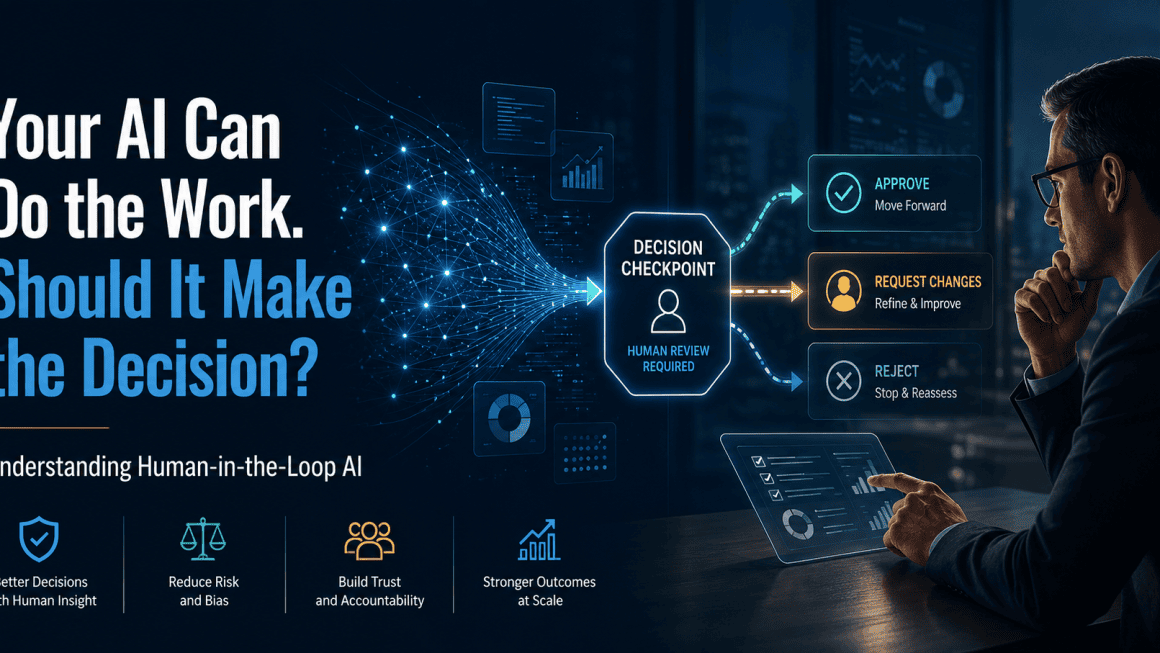
To stop this cycle, we must move toward a Human-in-the-Loop (HITL) framework that prioritizes inquiry over execution. This shift ensures that the AI’s Neural Networks are aligned with your specific strategic objectives before the first draft is ever generated.

The Alignment Gap in B2B SaaS Operations
In the world of RevOps, precision is the difference between a closed deal and a lost lead. When AI is used to generate sales collateral or analyze CRM data, a “good enough” prompt often results in generic, low-value output.
This is what we call the Alignment Gap. It occurs when the user’s mental model of the task does not match the AI’s interpreted model of the instructions.
Addressing this gap is critical for any organization looking to eliminate CRM data silos with agentic AI in 2026. Without a structured inquiry phase, AI tools often ignore the subtle nuances of your specific industry or internal processes.
Designing the “Ask First” Protocol
The most effective way to close the alignment gap is to prevent the AI from starting the task immediately. By issuing a “hard stop,” you force the model to identify its own knowledge gaps.
Use this foundational template for all non-trivial tasks:
“I want to [TASK] so that [SUCCESS CRITERIA]. DO NOT start yet. Ask me clarifying questions to refine the approach. Only begin once we’ve aligned.”
This structure leverages the model’s Context Window to build a comprehensive brief. The AI will typically respond with a structured questionnaire covering target audience, tone, data sources, and constraints.
According to recent studies by Gartner, organizations that implement structured AI discovery phases report significantly higher satisfaction with automated outputs. This process turns a one-way command into a collaborative strategic session.
Scaling Accuracy with Agentic AI Workflows
Individual prompting is only the beginning. For true enterprise scale, this “Ask First” mentality must be baked into your Agentic Workflows.
In these systems, an “orchestrator” agent identifies the task and delegates discovery to a “specialist” agent. This specialist is responsible for interviewing the human user to gather all necessary Metadata.
This is why many leaders are realizing it is time to stop celebrating AI pilots and start talking about AI operations. Operationalizing AI means building these intake forms into the very fabric of your software stack.

Tool Selection: When to Use Claude vs. Gemini
While the “Ask First” technique is platform-agnostic, the quality of the questions varies between models. Strategic thinkers need to know which tool to reach for based on the complexity of the task.
Claude 3.5/4 (Anthropic) is currently the gold standard for this specific pattern. Its training emphasizes safety and constitutional alignment, which translates into more thoughtful, layered questions that probe for edge cases.
Gemini 1.5 Pro (Google), on the other hand, excels when the discovery phase requires the analysis of massive datasets or long-form documents. Its massive Context Window allows it to ask questions based on thousands of pages of source material.
For teams focused on B2B SaaS, testing these models through an A/B Testing framework is essential. You may find that one model is better for creative briefing while another is superior for technical documentation.
The Role of RevOps in AI Governance
Revenue Operations teams are uniquely positioned to own the “Ask First” movement. Because they sit at the intersection of Sales, Marketing, and Success, they see where communication breaks down.
RevOps can transform high-performing “Ask First” prompts into standardized intake forms. This ensures that every team member, regardless of their technical skill, is getting elite-level outputs from the corporate LLM.
As noted in the Harvard Business Review, the future of the revenue function depends on data integrity. Using AI to ask the right questions before execution helps maintain that integrity by preventing the injection of “hallucinated” data into the system.
Establishing these standards is a core component of AI Enablement. It moves the needle from “playing with AI” to “powering the business” through disciplined, repeatable processes.
Conclusion: Moving from Instruction to Alignment
The shift from “writing better prompts” to “building better alignment” is subtle but transformative. It moves the burden of clarity from the human to the partnership between human and machine.
By demanding that your AI tools ask questions before they act, you are reclaiming your time. You are ensuring that every output is not just “good,” but strategically sound and operationally ready.
In the rapidly evolving landscape of 2026, those who master the art of the discovery phase will outpace those who are still chasing the “perfect” adjective. Start every project with a “hard stop” and watch your accuracy soar.
FAQ: Frequently Asked Questions
1. What is an Agentic Workflow in AI? An Agentic Workflow refers to a system where AI is not just a passive responder but an active participant in a process. It can plan, use tools, and interact with other AI agents or humans to complete complex, multi-step goals autonomously with high reliability.
2. Why is “Ask First” better than a detailed prompt? Even a detailed prompt has “blind spots” the user might not see. The “Ask First” method forces the LLM to identify these gaps. This proactive inquiry ensures the AI has 100% of the context required before it spends tokens on a draft.
3. Can this method reduce AI hallucinations? Yes, significantly. Hallucinations often occur when an AI is forced to “guess” missing information to complete a command. By providing a structured discovery phase, the AI fills its Context Window with facts provided by the user, leaving less room for creative fabrication.
4. Which AI tool is best for strategic discovery? While preferences vary, Claude is highly regarded for its structured and nuanced questioning. However, Gemini is superior if the discovery phase involves referencing massive external files. Both are significantly better at this than older, less sophisticated models.
5. How does this impact RevOps efficiency? It reduces the “feedback loop” waste. Instead of a RevOps manager rejecting three different AI-generated reports, they spend five minutes answering clarifying questions. This results in a near-perfect first draft, saving hours of manual editing and data correction.
6. Is this technique useful for coding and development? Absolutely. In software engineering, “Ask First” prevents the AI from writing 500 lines of code based on a misunderstood architecture. It forces a discussion on dependencies, libraries, and deployment environments before any code is generated, ensuring technical alignment.
7. How many questions should I let the AI ask? Usually, 5 to 10 questions are the “sweet spot.” If the AI asks too few, push back and ask for more depth. If it asks too many, you can tell it to prioritize the most critical three questions to get started.
8. What is “Entity Density” in AI optimization? Entity Density refers to the strategic use of key industry terms (Entities) that help AI models map your content to a broader knowledge graph. This is a core part of GEO (Generative Engine Optimization), making your content more “findable” by AI.
9. Do I need special software to use this? No. This is a prompting philosophy, not a platform feature. You can use this “Ask First” template in any standard chat interface, including ChatGPT, Copilot, or specialized enterprise AI wrappers, making it highly portable and scalable.
10. How do I start implementing this in a team? Start by creating a “Prompt Library” of intake templates. Train your team to use the “DO NOT start yet” command. Monitor the quality of the outputs over a 30-day period to measure the reduction in revision cycles.
Author

Brian Nielsen is a forward-thinking technologist and the founder of Nielsen Knowledge, where he bridges the gap between complex artificial intelligence and practical business growth. With a deep-rooted background in enterprise sales, RevOps, and digital transformation, Brian has spent his career helping organizations navigate the shift from traditional workflows to AI-driven ecosystems.
Based in Adelaide, Australia, Brian is recognized for his ability to translate "AI hype" into actionable ROI. His work at Sentia focuses on empowering leaders to embrace Agentic AI and modern sales strategies, ensuring that technology serves as a catalyst for human potential rather than a replacement for it.
Expertise & Focus
Generative AI Strategy: Helping enterprises move beyond basic prompting to sophisticated, "Ask First" AI integration.
RevOps & Sales Leadership: Leveraging data-driven insights to scale software sales and optimize revenue cycles.
Community Building: Fostering a collaborative space at Sentia for professionals to learn, share, and master the evolving AI landscape.
Beyond the Screen
When he isn't decoding the latest LLM updates or consulting with CFOs on financial year transitions, Brian is a vocal advocate for the Australian tech ecosystem. He believes that the competitive edge in the modern market lies at the intersection of curiosity and computational intelligence.
"The goal isn't just to use AI—it's to architect a future where AI handles the mundane so we can focus on the meaningful."
Connect with Brian: