

2023 will go down as the year of AI in business school history books. Rarely has a new technology evolved so quickly, gained wide spread use nor stirred as much concern as Artificial Intelligence. Regardless of where people stand on the use of AI (see 1984 “The Terminator“) it is already well entrenched in the business world and its use is only going to expand.
In this regard I’m going to focus on the top ten applications of AI in Sales systems so far. Sales tech stacks are usually the first ones impacted in any business organization because it is the most visible profit (or loss center). There is zero doubt that AI is rapidly transforming the sales landscape. We’re seeing the introduction of so many innovative applications that enhance efficiency, improve customer experiences, and boost sales performance its hard to know where to start, nor completely understand what is coming.
With that being said I’m going to put a stake in the proverbial ground and start with what I think are the top 10 things I see AI doing right now that are dramatically affecting sales systems:
2023’s Top 10 new applications of AI in sales tech:
- AI-powered Sales Coaching and Training: Coaching tools can analyze every sales conversation or interaction, identify areas for improvement, and provide real-time feedback for sales reps. This AI augmented and personalized approach helps reps refine their communication skills, build stronger relationships with potential customers, and close more deals. It does this without a manager, trainer or supervisor needing to spend “time” with a sales rep. It can be self sourced and used when the rep wants it or by a manager to see how a rep is performing without having to have those “difficult conversations” where a customer calls and says XYZ is terrible, you need to get rid of them! It is no longer a she said, he said as it is all recorded.
- AI-driven Predictive Sales Forecasting: AI algorithms analyze historical sales data, market trends, and customer behavior to predict future sales performance with greater accuracy (this assumes clean data!). This enables sales teams to make informed decisions about resource allocation, target customer segments, and sales strategies. As always the better the data that is input (Sales Reps are notorious for not using their CRMs) the more likely AI can improve predictive forecasting.
- AI-enabled Lead Qualification and Prioritization: AI models assess leads based on various factors, such as firmographic data, website behavior, and engagement patterns, to identify the most promising leads. This helps sales reps focus their efforts on the most qualified leads, increasing their chances of closing deals.
- AI-powered Sales Content Generation and Personalization: AI tools can generate personalized sales and marketing content, such as email templates, social media posts, and sales pitches, tailored to the specific needs and interests of each buyer persona/prospect. This personalized approach can increase engagement and conversion rates.
- AI-driven Conversational Sales Chatbots: AI chatbots can engage in real-time conversations with potential customers, answering questions, providing product information, and scheduling demos. This 24/7 availability and personalized interaction can enhance customer experience and capture leads early in the sales cycle.
- AI-powered Sales Incentive Compensation and Optimization: AI algorithms can analyze sales data and performance metrics to determine optimal incentive compensation plans that motivate reps and drive sales growth.
- AI-enabled Sales Territory Planning and Optimization: AI models can analyze market data, customer demographics, and sales performance to identify optimal sales territories that maximize revenue potential.
- AI-powered Sales Prospecting and Discovery: AI tools can identify and prioritize potential customers based on various factors, such as firmographic data, website behavior, and social media engagement, helping sales reps uncover new opportunities.
- AI-driven Sales Opportunity Management and Deal Coaching: AI can analyze sales opportunities, identify buyer intent, potential risks and roadblocks, and provide real-time coaching to sales reps to increase their chances of closing deals.
- AI-powered Sales Workflow Automation: AI tools can automate repetitive sales tasks, such as data entry, email follow-ups, and scheduling appointments, freeing up reps to focus on more strategic activities.
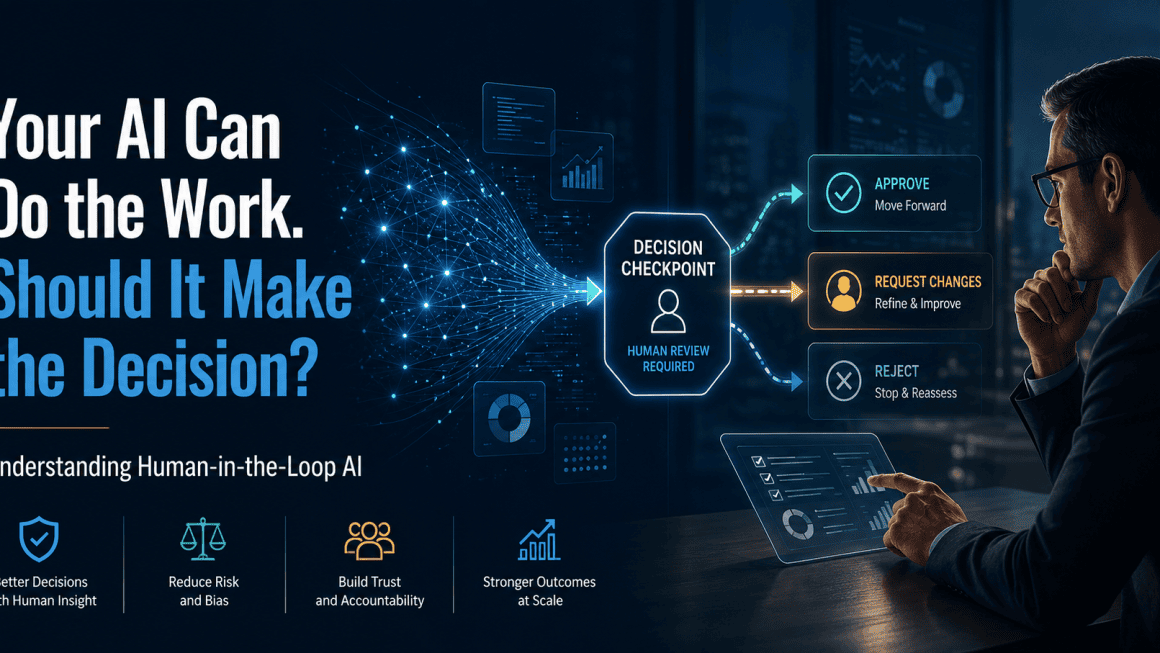
The key element to all ten of these AI use case applications is “CAN.” Every single one of these requires a blended AI experience to make it work. None of these can successfully operate without human interaction either in the development, use or tweaking of them. In fact AI is so new in most of these applications that if you don’t have a trained human available to constantly watch, improve and tweak any of these AI’s on a regular basis I would be very concerned about deploying them.
With that in mind we need to focus on the number one tool that most sales reps both hate and must use on a fairly regular basis, CRM (Salesforce says 26% daily usage for CRMs). CRMs or Customer Relationship Management software is an $80Billion dollar business but the failure rates are surprisingly high. I wondered if AI could solve this problem and turned to CRM experts for the answer.
I spoke with renowned CRM expert and best selling Author Mike Hudlow (see “How not to F*CK up a CRM system“) on these top ten AI solutions and asked him – What is the biggest problem with CRM systems right now?
Mike said: “”Human Change Management” is the key reason systems fail. But, unfortunately there are many reasons that this can occur. The reality is that people like to blame the technical system itself but any modern CRM system is capable of improving a companies CRM process/workflow. The challenge for any program/product/project manager, CIO, CTO, CMO or person in charge of the CRM to make it both welcomed and desired. Sounds scary human doesn’t it? A CRM can and will be resisted by: 1) those that don’t trust it, think its needed and/or believe that others will steal their own personal IP, 2) those divisions within a company that think it is too expensive, 3) People or teams that believe that the system will replace another system to which they are attached (career or emotionally ), 3) or people that actually or perceptually believe it creates more work, and 4) leaders that feel it infringes upon their own autonomy.”
My second question to Michael was can any of these top ten AI enhancements solve those problems?
Mike replied: “At the end of the day an AI supplemental tool can improve many of these as it makes the native CRM tool “bend” to their own style and will make them more comfortable with the AI’s ability to bridge the gap, bend to their own style, and allow them to let the CRM system they don’t feel comfortable with be more “human” and meet their own specific needs”
I then turned to AI Visionary and Sales Process Expert David Forder for an AI perspective on CRMs and AI. My question was simple yet nuanced. Can AI solve the biggest problems in CRM i.e., no sales rep wants to use it?
David replied: “The biggest issue that CRMs face is a lack of user adoption. 74% of customer facing staff refuse to use their CRM every single day. Yet companies spend billions of dollars on it! Adding AI into the mix has the potential to make this even worse! Unless any AI integration improves the underlying complexity of using a CRM and makes them simpler and more effective it will definitely make it worse not better! This has to be the focus of AI.”
I then asked Mr. Forder – how do you make it simpler? Get sellers using it?
David’s reply: “The key to making the CRM simpler is to ignore what will appeal to C-Suite i.e. ignore the focus on data heavy screens, reports and dashboards and re-engineer the CRM to meet the needs of the bulk of the users – those customer facing teams. Design the CRM to meet their daily needs, so they want to use it as it does the work for them. If you do this they will embrace their CRM and it can then work effectively for C-Suite as the data will actually be in the system! That’s our focus at Sentia AI! Have your CRM do most of the work for them, tell them what to do next and watch usage rates explode!”
Both Mike’s and David’s battle scars, extensive CRM implementations, sales experience and knowledge made me think I should interview both of them and get their thoughts on video for everyone to learn from. So we’re going to do it and here is the link:
How Not to F*CK Up your CRM with AI
This may turn into two video segments as the topic is so timely, important and I found that the breadth and depth of their CRM and AI system implementation experience was quite simply amazing!
These gentlemen have their finger on the pulse of sales, AI & CRM implementation success. It will be a great how to “fix it” roundtable.
Please join us on November 29th for an in-dept on how not to F*CK up A CRM system with AI!

David is an investor and executive director at Sentia AI – The Intelligence Engine, a next generation AI sales enablement technology company and Salesforce partner. Dave’s passion for helping people with their AI, sales, marketing, business strategy, startup growth and strategic planning has taken him across the globe and spans numerous industries. You can follow him on Twitter LinkedIn or on Sentia Says.
Author
 David Brown | CCO & Startup AI Investor
David Brown doesn't just discuss AI; he builds the infrastructure that makes it profitable. As CCO and Investor at Sentia AI, David is the strategist enterprise leaders turn to when their AI pilots stall and their data silos remain impenetrable. He fixes stalled AI pilots, CRM / ERP integration and scales enterprise AI with his amazingly talented teamates.
With a career forged on Wall Street and Ernst and Young, David brings a high-focus, results-driven discipline to the tech sector. His trajectory—from navigating global markets to CEO of startups and founding a top-tier international startup incubator for hundreds of ventures—has uniquely positioned him at the bleeding edge of the "Agentic AI" revolution.
The Enterprise AI Architect
David’s mission is the elimination of the "AI Circle of Sorrow"—the gap where expensive AI tools fail to talk to legacy systems and most importantly humans. He specializes in solving the most aggressive enterprise AI scaling hurdles facing large enterprise clients today:
Siloed Data Liquidation: Breaking down the walls between fragmented business units to create a unified data truth. See DIO: www.dio.sentia.online
ERP & CRM Connectivity: Forging seamless, bi-directional integration between core systems of record and modern AI applications. See DSO www.sentia.website
The "Single Pane of Glass": Developing client Unified AI Dashboards—a command center that provides C-Suite leaders with total visibility across every AI-driven workflow in the organization. This is one of Sentia's specialities.
Enterprise AI Scaling: Moving beyond fragmented "app-creep" to build a cohesive, governed, and scalable AI orchestration layer.
A relentless advocate for AI Orchestration, David ensures that Sentia AI remains a premier Salesforce partner by delivering autonomous agentic systems that don't just "help" sales teams—they transform revenue operations into high-velocity engines.
Connect with the Seer of AI Integration success:
LinkedIn: linkedin.com/in/davidbrown07
- Sentia Community
X (Twitter): @intlmktentry
Insights: Sentia AI Community

 David Brown | CCO & Startup AI Investor