Artificial Intelligence Doesn’t Hallucinate – It’s Just Being Human!
By David ·
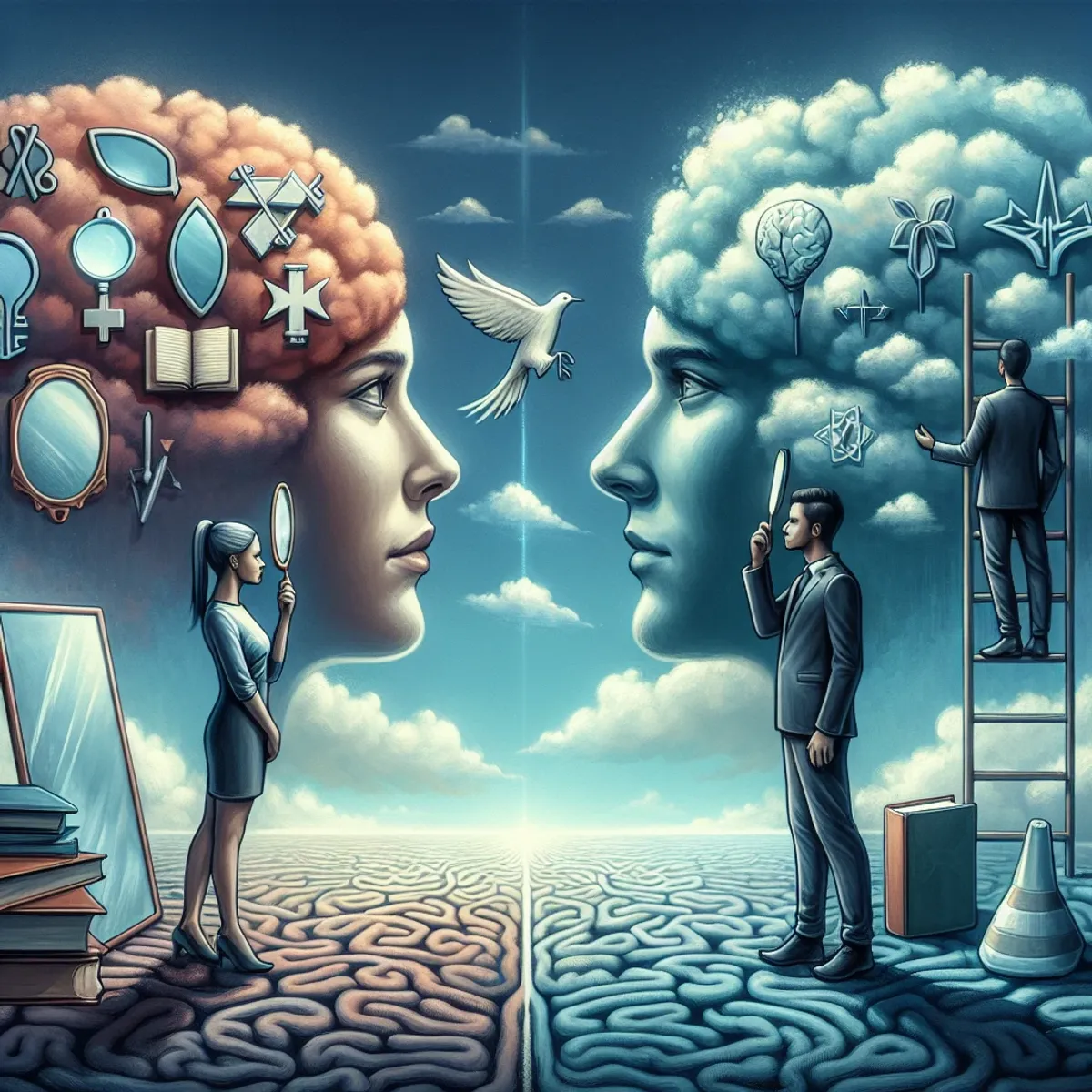
Let me explain.
One of the most obvious outcomes from the covid pandemic & the turbulent political environment over past few years is a recognition that we all tend to cling to our opinions and beliefs very, very tightly.
“I just know it” is often said; sometimes in the face of overwhelming evidence to the contrary.
But where does this certainty come from and just how sturdy is that foundation?
There is a word for this phenomena.
The Dunning-Kruger effect is a cognitive bias where people with limited competence in a specific domain overestimate their abilities. It occurs because they lack self-awareness and cannot accurately assess their own skills. Essentially, they think they know more than they do.
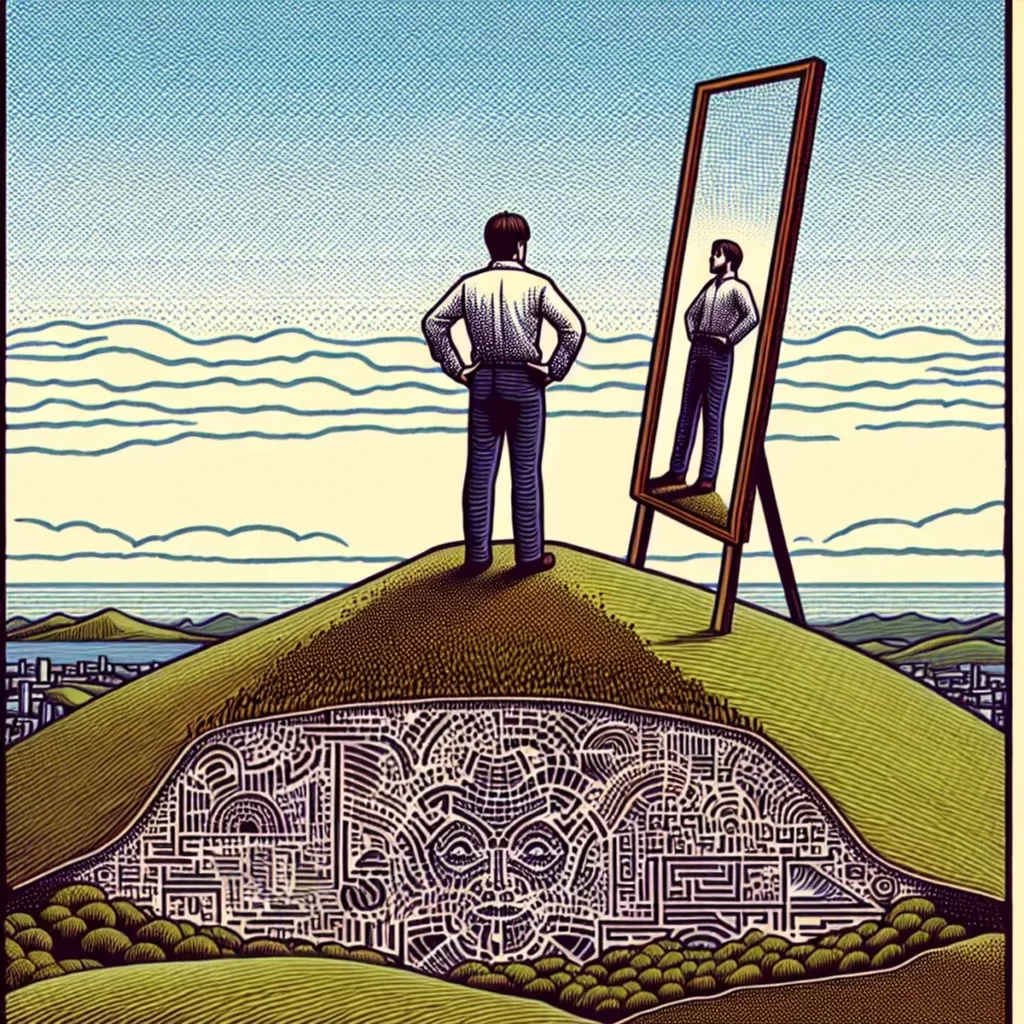
The initial study by David Dunning and Justin Kruger in 1999 focused on logical reasoning, grammar, and social skills. It revealed how people often misjudge their abilities due to a lack of metacognition (the ability to analyze one’s own thoughts).
Fact is, our thoughts and opinions are actually related closely to our memory.
Typically our opinions, our beliefs and our sense of self comes from,
- Cognitive biases: These relates to systematic errors in thinking that affect how people process and interpret information; and they certainly influence their beliefs and decisions. Many cognitive biases are related to memory, such as confirmation bias, which is the tendency to seek out and remember information that confirms one’s existing opinions, or hindsight bias, which is the tendency to remember past events as more predictable or consistent with one’s current views than they actually were.
- Emotional memory: This is the memory for events that are emotionally arousing or significant. Emotional memory is enhanced by the release of stress hormones that act on the amygdala, a brain region involved in processing emotions and fear. Emotional memory can affect opinions by making them more vivid, persistent, and more influential on behavior. However, emotional memory can also be inaccurate or intrusive, leading to false or distorted recollections of events that may affect opinions.
- Narrative memory: This is memory for autobiographical events that are organized into coherent stories that give meaning and context to one’s life. Narrative memory is influenced by one’s concept of self, goals, values, and culture. Narrative memory can affect opinions greatly by shaping one’s identity, worldview, and sense of purpose. However, narrative memory can also be selective, reconstructive, and influenced by external sources, leading to inconsistencies or gaps in one’s personal history that may affect opinions.
So, if our opinions are linked inexorably to our memories. How good is yours?
Perceiving oneself as having a great memory is critical to every individual’s confidence, well-being, and daily functioning.
- When we trust our memory, we approach tasks with confidence, whether it’s recalling information needed to do your job, approaching an exam or remembering important dates.
- Feeling that our memory is reliable boosts our overall self-esteem and encourages us to take on challenges.
- Memory enhances social interactions. Remembering names, details, and shared experiences makes us more likable and relatable.
- Workplace: Professionals rely on memory for productivity. From meetings to deadlines, memory competence contributes to success.
- Reducing anxiety: Fear of memory lapses can cause stress. Feeling confident in our memory alleviates anxiety.
- Nostalgia: A vivid memory lets us relive cherished moments, fostering positive emotions.
- And, a good memory accelerates learning. We build on past knowledge, adapt, and innovate.
This all leads us to want to over-estimate just how great our memory is.
I know that we all want to feel that our own memory is an amazing recording device; accurately taking note of the details of everything that we have experienced, read, visited and heard about. But the unfortunate fact is that it is not!
Elizabeth Loftus, one of the World’s leading experts on human memory, says, “If memory is the bedrock of the self … it is built on shifting sands.”
No-one has done more than psychologist Loftus (from the University of California, Irvine,) to expose the fallibility of human memory. In the 1990s, amid growing panic over claims of satanic abuse rings, the psychologist showed how easy it is for people to develop false memories of events that never ever happened.
All it took was being asked repeatedly to imagine them. At the time, unfortunately, this was a common psychotherapy technique to recover supposedly ‘repressed memories’.
Over the past three decades, Loftus, has become well-known for her work as an expert witness in legal cases. Her ongoing research on the fallibility of eyewitness testimony has taken on fresh importance in an era of fake news, the Me-Too movement and digital image manipulation. (1)
Elizabeth Loftus has found ordinary memory to be so malleable that she can easily prompt volunteers to “remember nonexistent broken glass and tape recorders; to think of a clean-shaven man as having a mustache, of straight hair as curly, of hammers as screwdrivers, to place a barn in a bucolic scene that contained no buildings at all, to believe in characters who never existed and events that never happened.”
“We now have a new paradigm of memory,” notes Loftus, “where memories are understood as a creative blending of fact and fiction, where images are alchemized by experience and emotion into memories.” (2)
So, we have established that our opinions, the facts we just KNOW, the statements we make, the feelings we believe, in fact most of our day-to-day activity relies heavily on memory.
So how chilling is it that this memory of ours is so malleable, that it changes over time, that it can be easily re-made by suggestion, and is so tenuous.
I guess you could say that a lot of the things we truly ‘believe’ could well be hallucinations of sorts?
Much like AI’s sometimes do.
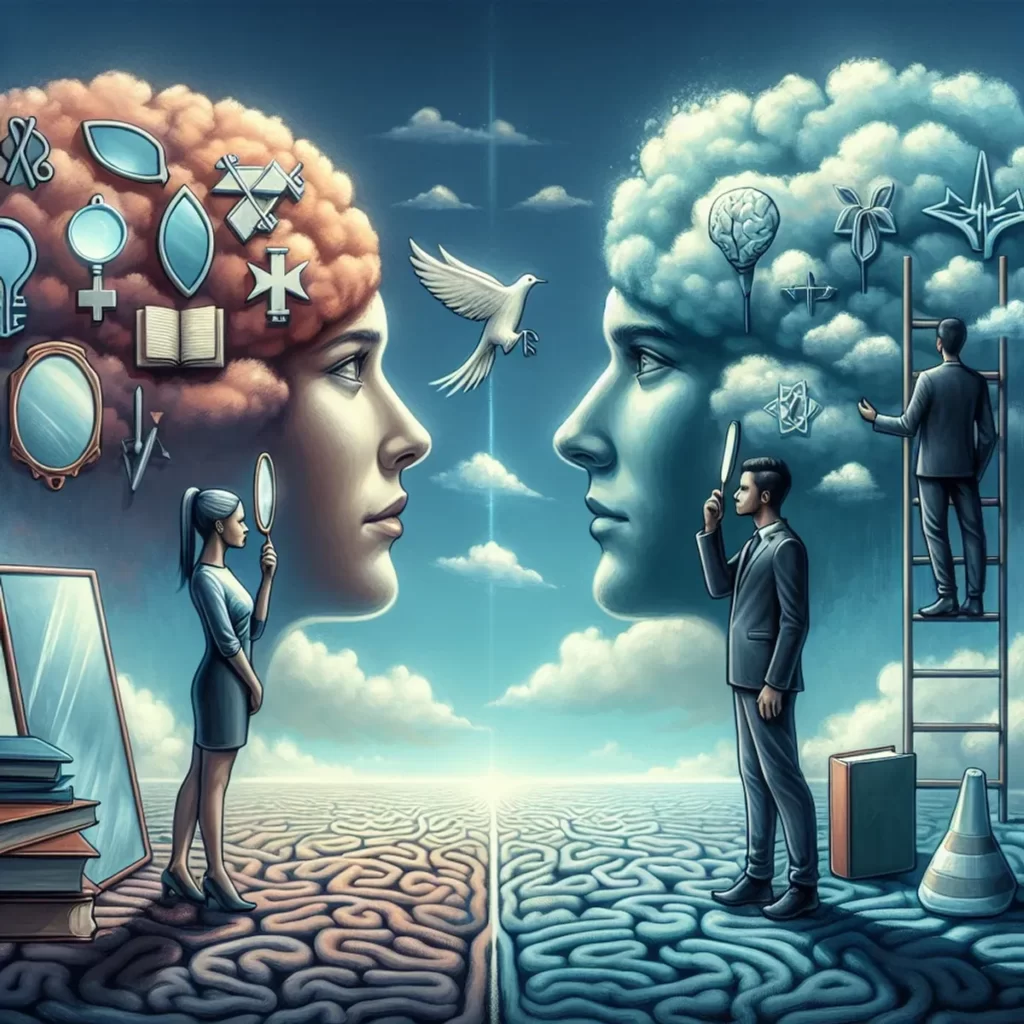
AI ‘hallucination’ refers to a phenomenon where large language models (LLMs), such as OpenAI’s GPT-4, Bard AI or Google’s Palm, can generate outputs that contain false or misleading information presented as fact.
These outputs are sometimes nonsensical or altogether inaccurate and may not align with real data or events at all. Sounds human to me.
These are often reported on and discussed as a major hurdle to the use of artificial intelligence – but just how different is this really to asking a business colleague for help and assuming they actually know what they are talking about?
Or perhaps relying on your own memory to solve a problem assuming that your memory must obviously be correct?
If human memory and knowledge is as fallible as the ‘facts’ suggest, I feel that we may be giving AIs a bad rap! It may be that they are far more human than we would like to admit!
Food for thought?
[1] Memory special: Can you trust your memories? | New Scientist
[2] It’s Magical, It’s Malleable, It’s… Memory | Psychology Today