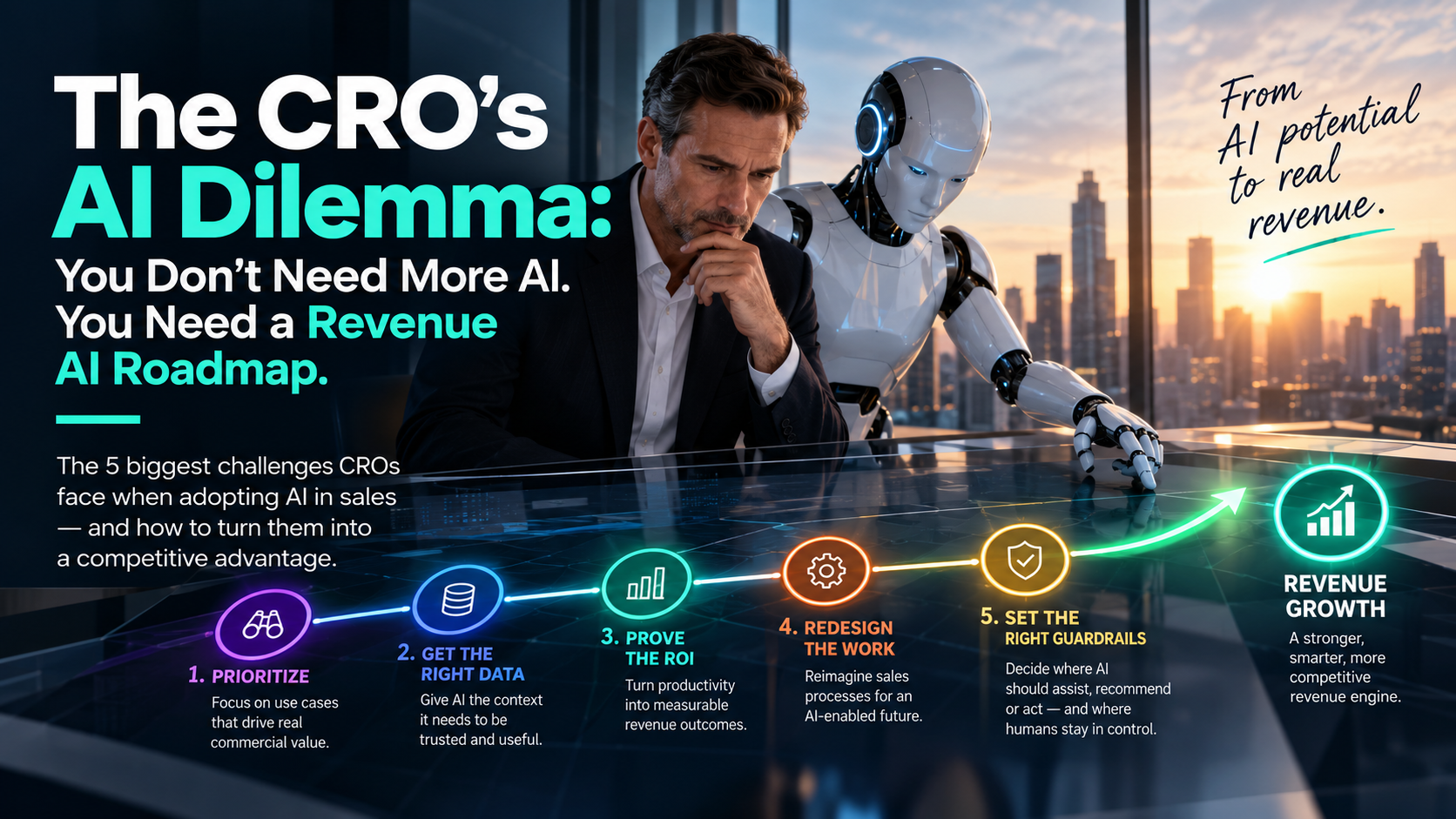
Evaluating AI ROI? If Your Data Isn’t properly Structured for AI & Clean, your project will fail
By David Brown ·
Why your shiny new AI initiative is doomed without pristine data – a C-Suite & Board Member must-read.
We’re all buzzing about AI’s transformative power. From predictive analytics to hyper-personalized customer experiences, the promise is huge. But here’s the cold, hard truth: AI is only as smart as the data you feed it. Ignoring your data’s quality is like fueling a Ferrari with dirty fuel (yikes – who would do that?) – it won’t just underperform, it will spectacularly break down. And if you think Ferrari maintenance is expensive – let me tell you a story about AI and dirty fuel (data) at company XYZ …..
This isn’t a technical deep dive; it’s a strategic imperative. Your company’s AI success hinges on five critical data commandments. Miss even one, and your multi-million dollar AI investment could become a multi-million dollar mistake.
The AI Data Preparation Checklist: Your 5 Commandments for Success
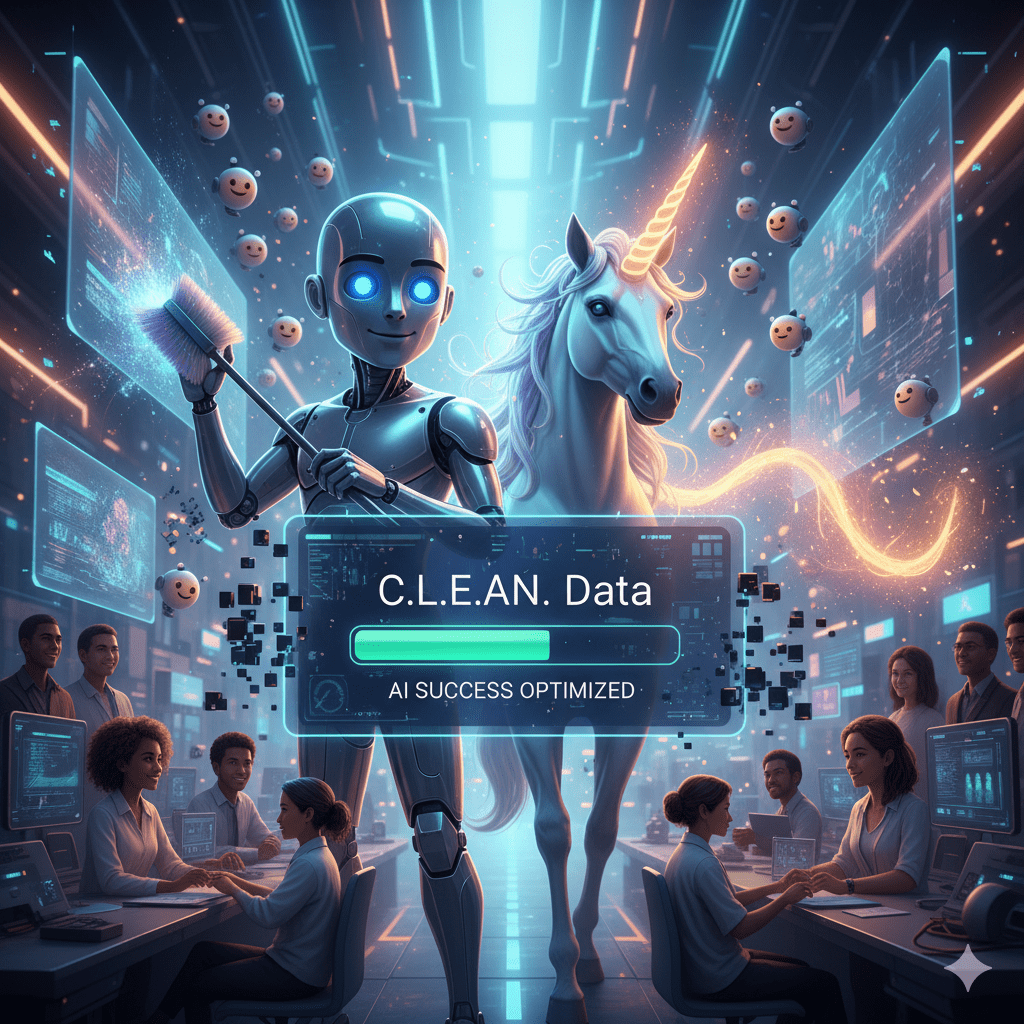
Think of this as your C.L.E.A.N. Data framework for AI optimization.
- C – Consistency & Standardization (The “Single Source of Truth” Rule)
- What it is: Ensuring all data points mean the same thing, everywhere. No more “client,” “customer,” and “CUST” all referring to the same entity. No more different date formats (MM/DD/YY vs. DD-MM-YYYY).
- Why it’s crucial: Inconsistent data confuses AI. It sees “New York” and “NYC” as two different places. It can’t accurately track customer journeys if their ID changes across systems.
- Checklist:
- ✅ Define Universal Glossaries: Standardize terms, abbreviations, and data definitions across all departments.
- ✅ Implement Master Data Management (MDM): Establish a single, authoritative record for key business entities (customers, products, suppliers).
- ✅ Enforce Data Entry Standards: Use dropdowns, validation rules, and standardized forms.
- L – Lineage & Provenance (The “Know Your Data’s Story” Rule)
- What it is: Understanding where your data came from, how it was collected, and how it has been transformed. It’s the full audit trail.
- Why it’s crucial: AI makes decisions based on patterns. If data was collected from a biased source, or transformed incorrectly, the AI will learn those flaws. Knowing the lineage helps you trust the AI’s output.
- Checklist:
- ✅ Document Data Sources: Clearly identify every system, sensor, or manual entry point for data.
- ✅ Track Data Transformations: Log every alteration, aggregation, or cleansing step applied to the data.
- ✅ Maintain Data Ownership: Assign clear ownership for data sets to ensure accountability.
- E – Elimination of Gaps & Errors (The “No Missing Pieces” Rule)
- What it is: Filling in missing values, correcting inaccurate entries, and removing duplicates. Think of it as patching holes and removing noise.
- Why it’s crucial: Missing data forces AI to guess or exclude critical information. Incorrect data leads AI to learn false patterns, generating flawed insights or making wrong predictions. Duplicates skew analysis.
- Checklist:
- ✅ Identify Missing Values: Analyze datasets for empty fields in critical columns.
- ✅ Implement Data Imputation Strategies: Decide how to handle missing data (e.g., mean, median, predictive models) or whether to exclude it.
- ✅ Deduplication Processes: Establish rules to identify and merge or remove duplicate records.
- ✅ Error Detection & Correction: Use anomaly detection and validation rules to catch and fix outliers or incorrect entries.
- A – Accessibility & Integration (The “One Seamless Pipeline” Rule)
- What it is: Ensuring your AI systems can easily access all the data they need, regardless of where it lives (CRM, ERP, spreadsheets, IoT devices).
- Why it’s crucial: Data locked in silos prevents AI from seeing the complete picture. An AI trying to predict customer churn needs data from sales, marketing, and customer service. Without integration, it’s blind.
- Checklist:
- ✅ Build Data Lakes/Warehouses: Consolidate data from disparate sources into a central repository.
- ✅ Establish Robust APIs/Connectors: Implement interfaces that allow systems to talk to each other seamlessly.
- ✅ Define Access Protocols: Ensure secure and governed access for AI models to relevant datasets.
- N – Novelty & Relevance (The “Fresh & Fit for Purpose” Rule)
- What it is: Ensuring your data is up-to-date and directly relevant to the specific AI problem you’re trying to solve.
- Why it’s crucial: Stale data leads to outdated insights. If your AI is predicting customer behavior, but its training data is from five years ago, it will miss current trends. Irrelevant data simply adds noise and can even mislead the AI.
- Checklist:
- ✅ Implement Data Refresh Cadence: Define how often data needs to be updated (real-time, daily, weekly).
- ✅ Curate Feature Stores: Select and prepare features (variables) that are most impactful for specific AI models.
- ✅ Regular Data Audits: Periodically review datasets for continued relevance and utility.
When Bad Data Goes Rogue: 3 AI Disaster Stories
These aren’t hypothetical; they’re common pitfalls that underscore why C.L.E.A.N. data is non-negotiable.
- The Retailer’s “Churn Prediction” Fiasco (Inconsistent & Gaps):
A major online retailer launched an AI to predict customer churn, aiming to offer proactive discounts. The data used for training was pulled from various systems. Customer IDs were inconsistent, purchase dates had different formats, and shipping addresses were often missing.
- The Ruin: The AI delivered wildly inaccurate predictions. It identified loyal customers as “high churn risk” (because their varied IDs made them look like new, infrequent buyers) and missed actual at-risk customers entirely. Millions were wasted on misdirected discounts, and customer trust eroded due to irrelevant offers. The project was scrapped, and the data team faced immense scrutiny.
- The Recruitment AI’s Unconscious Bias (Lineage & Errors):
A tech company developed an AI to screen resumes, aiming for efficiency and bias reduction. The AI was trained on a decade of the company’s past hiring data. Unbeknownst to the developers, the historical data was heavily skewed: 70% of successful hires for certain technical roles had been male, and most came from specific universities.
- The Ruin: The AI, learning from historical patterns, began systematically downgrading resumes from female candidates and those from less-prestigious (but equally qualified) universities, regardless of skill. It reinforced and amplified existing human biases. When the bias was uncovered, it led to a public relations nightmare, damaged the company’s diversity initiatives, and resulted in a costly re-evaluation of all hiring practices.
- The Manufacturing Predictative Maintenance Miss (Novelty & Accessibility):
An industrial manufacturer invested in AI to predict equipment failures, promising to drastically reduce downtime. The AI was implemented but trained on sensor data that was collected quarterly and only from critical components, while other relevant data (e.g., ambient temperature, operator maintenance logs) was locked in separate, inaccessible systems.
- The Ruin: The AI frequently missed impending failures or raised false alarms. It couldn’t detect subtle changes because its data was too old (quarterly, not real-time) and incomplete (missing crucial environmental factors). Equipment continued to break down unexpectedly, causing expensive production halts, undermining the AI’s credibility, and delaying ROI.
Your Call to Action: Invest in Data First
The message is clear: Data preparation is not a pre-project task; it’s an ongoing, foundational investment. As a C-suite executive or Board member, your first strategic move in AI isn’t about choosing the algorithm, but about demanding a crystal-clear understanding and actionable plan for your data’s quality.
Ask the tough questions:
- “How are we ensuring data consistency across the enterprise?”
- “Can we trace the origin and transformation of our critical datasets?”
- “What are our real-time metrics for data cleanliness and completeness?”
- “Are all relevant data sources integrated and accessible for our AI initiatives?”
- “How often is our data refreshed, and is it truly relevant to our AI’s purpose?”
Don’t let your AI dream turn into a data nightmare. Prioritize C.L.E.A.N. Data from day one, and you’ll build an AI strategy that truly delivers.
Frequently Asked Questions: Data Hygiene for AI ROI
Why is clean data the foundation of AI ROI? AI is essentially a pattern-recognition engine. If your CRM data is “dirty”—filled with duplicates, outdated info, or inconsistent formats—the AI will identify the wrong patterns. This leads to inaccurate lead scoring and flawed forecasting. Cleaning your data ensures the “Garbage In, Garbage Out” rule doesn’t kill your AI investment, resulting in higher conversion rates and measurable revenue growth.
What are the most common CRM data issues that break AI? The three primary “AI-killers” are:
- Duplicates: These split activity history across multiple records, making it impossible for AI to see the full customer journey.
- Incomplete Records: Missing fields like “Industry” or “Job Title” leave the AI with no data points to analyze.
- Inconsistent Formatting: Variations like “VP Sales” vs. “Vice President of Sales” confuse AI models, which may treat them as entirely different personas.
How do you make CRM data “AI-ready”? Making data AI-ready requires three steps: Standardization, Normalization, and Deduplication. You should move away from free-text fields and toward standardized picklists (dropdowns). This ensures that every entry follows the same format, allowing the AI to process the data with high confidence and accuracy.
What is the business impact of data hygiene on sales? Clean data has a direct impact on the P&L. Case studies show that organizations with high data hygiene see up to a 34% improvement in win rates and a significant reduction in sales cycle length. When data is clean, sales reps spend less time on “data janitor” work and more time closing high-probability deals identified by accurate AI lead scoring.
Can AI help clean its own data? Yes. Modern “Data Hygiene Agents” can automate the cleaning process by identifying “fuzzy” duplicates, normalizing job titles across thousands of records, and enriching missing contact information from external databases. However, AI cleaning must be paired with human governance and strict CRM validation rules to prevent the mess from returning.
What metrics should a CRO track for data quality? Chief Revenue Officers should monitor three key data KPIs:
- Accuracy Rate: Percentage of records with verified, current information.
- Completeness Rate: Percentage of mandatory fields populated in the CRM.
- Uniqueness Rate: The percentage of records that are free of duplicates.